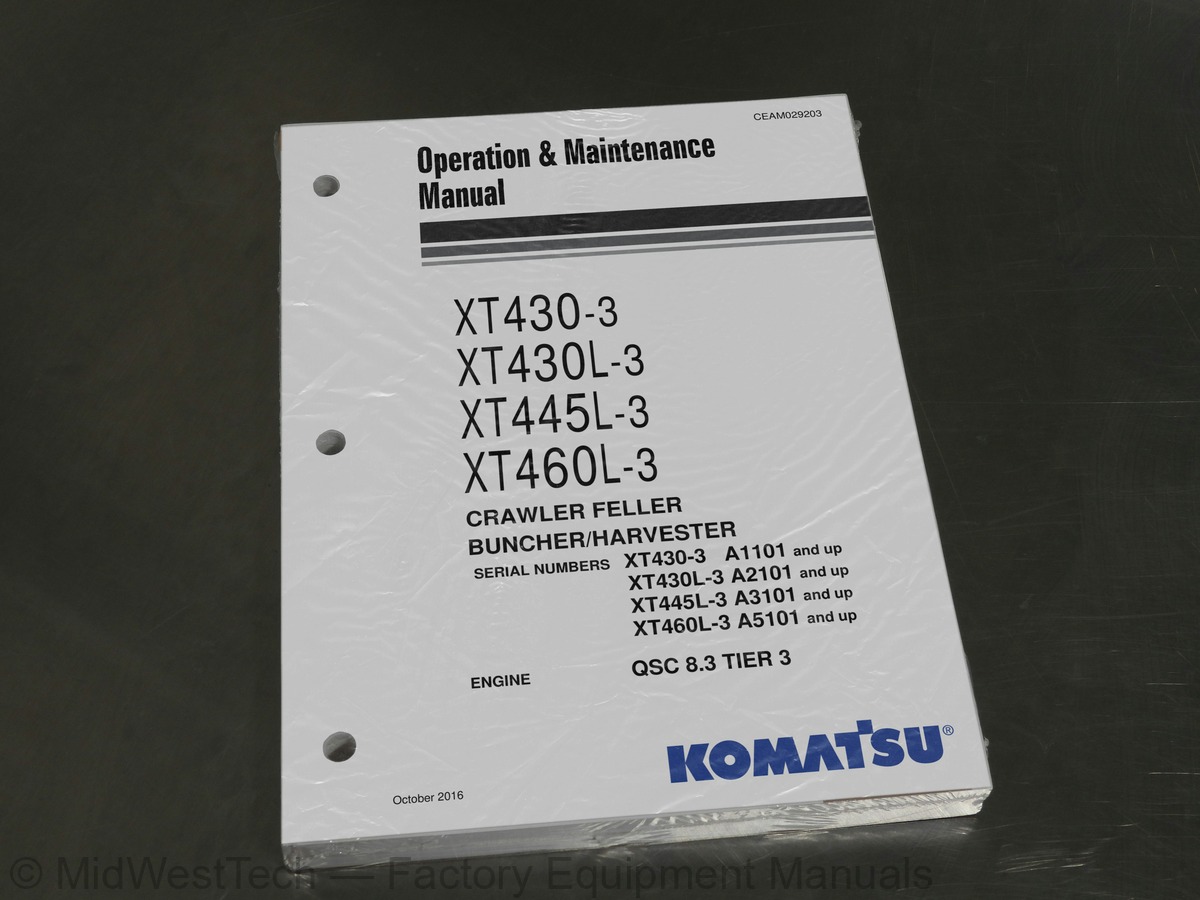
Komatsu XT430-3, XT430L-3, XT445L-3, XT460L-3 Crawler Feller Buncher Operation & Maintenance Manual
251 pages · Publication CEAM029203
Added to your cart. View cart
What's inside
From the manual's own table of contents: 322 topics. See sample pages (PDF, 551 KB)
- FOREWORD
- SAFETY INFORMATION
- INTRODUCTION
- Machine Orientation
- Protective Structure
- Breaking-in the New Machine
- Product Information
- Product Identification Number (Pin)/Machine Serial No. Plate
- Bar Saw (Option)
- Saw Head Identification Plate
- Engine Dataplate
- EPA Regulations
- Your Machine Serial Numbers and Distributor
- SAFETY AND WARNING DECALS
- Location of the Safety Decals
- OPERATIONAL SAFETY
- Unauthorized Modifications
- Before Starting the Engine
- Observe General Safety Rules
- Engine Ventilation
- Fuel, Oil and Hydraulic Fluid Fire Hazards
- Jump Starting or Charging Batteries
- Travel Controls May Produce Reversed Operations
- Travel Precautions
Show all 322 topics
- Operate Carefully on Snow and Ice and in Very Cold Temperatures
- Parking the Machine
- Do Not Disassemble Recoil Springs
- Accumulator
- Handling Gas Spring
- Precautions When Using
- Shut Down Control Functions
- Emergency Stop Function
- ADDITIONAL SAFETY EQUIPMENT
- Do Not Alter or Modify the ROPS, FOPS, OPS
- Seat Belt Must Be Used At All Times
- Maintain Standard Safety Equipment in Good Condition
- MAINTENANCE
- General Operator Precautions
- Mounting and Dismounting Precautions
- Handrails and Steps
- No Jumping On or Off Machine
- PRECAUTIONS TO PREVENT FIRE
- Fire Extinguisher and First Aid Kit
- Action if Smoke or Fire Occurs
- Prevent Fire
- Fire Caused by Fuel, Oil, Coolant or Window Washer Fluid
- Fire Caused by Accumulation of Combustible Material
- Fire Coming from Electrical Wiring
- Fire Caused from Piping
- Explosion Caused by Lighting Equipment
- Best Practices
- What to Do After Fire
- Action After Fire Suppression Activation
- ANSUL™ Fire Suppression System (Optional)
- CHECKFIRE 110 Detection and Actuation System
- CHECKFIRE SC-N Detection and Actuation System
- ANSUL™ Fire Suppression System Use
- Fire Suppression System Owner’s Manual
- GENERAL ORIENTATION
- OPERATION PRECAUTIONS
- General
- Before Beginning Work
- Attachment Safety
- During Machine Operation
- SERVICE AND MAINTENANCE PRECAUTIONS
- Towing the Machine
- Cooling and Hydraulic Systems
- Track Tension Adjustments Require Caution
- Diesel Fuel
- Batteries
- FIRE PREVENTION IN THE FIELD
- Fire Prevention Tips in the Field
- Fire Prevention in the Shop
- SHIPPING AND TRANSPORTATION
- Obey State and Local Over-the-Road Regulations
- Transporting the Machine
- Driving Machine on Trailer
- Truck Driver’s Starting, Driving and Boom Operation Instructions
- OPERATING CONTROLS
- Operator’s Cab
- Guards and Shields
- Cab Door
- Cab Step Operation
- Door Safety Interlock
- Emergency Cab Escape
- Roof Top Emergency Escape Hatch
- Front Cab Window Emergency Escape
- Air Conditioner
- Cab Pressurization
- Radio: AM/FM - AUX - Weather Band
- Dash Panel Switches, Displays and Gauges
- Operator’s Seat
- Fire Extinguisher
- ANSUL™ Maintenance
- Ansul™ Fire Suppression Daily Inspections
- Ansul™ Fire Suppression Monthly Inspections
- IQAN CONTROL SYSTEM
- Main Screen Display
- Display Indicators
- Gauges
- Main Menu Screen Selector
- Info Menu
- Measure Menu
- Adjust Menu
- Adjustment Settings
- Hydrostat Sub Menu
- Preferences Menu
- Options Display Page
- Operator Mode
- HP Control
- Restrict Mode
- Select Oil Type
- Track Speed
- Disc Saw
- Information Display Page
- Engine Display Page
- Faults Display Page
- Operating the IQAN MD4 Monitor
- First Time Start-up
- Menu Navigation
- Engine Configuration
- Handling a Fault
- BEFORE STARTING MACHINE
- Tracked Feller Buncher / Harvester Daily Inspection
- General Pre-Start Machine Inspection
- New Machine Break-in Procedures
- STARTING THE MACHINE
- Cold Weather Starting
- Options for Assisting Cold Weather Starts
- In-Tank Hydraulic Oil Heater (Optional)
- Track Drive Charge Oil Heater (Optional)
- Jump Starting the Engine
- Engine and Hydraulic Warming Procedures
- Warm-up Procedures
- Travel Controls
- Forward Travel
- Reverse Travel
- Turning During Travel
- Spin Turn
- Travel Speed
- Track/Parking Brakes
- Preventing Repetitive Strain Injuries
- Controlling the Front End Implements
- Control Pattern Diagrams
- Front End Attachment Movements
- Main Boom DOWN
- Main Boom UP
- Stick Retract
- Stick Extend
- Swing LEFT
- Swing Right
- Tool Tilt FORWARD
- Tool Tilt BACK
- Cab Level FORWARD
- Cab Level BACK
- Cab Level LEFT
- Cab Level RIGHT
- Cutting Attachment Clamp Arms OPEN
- Cutting Attachment Clamp Arms CLOSE
- Cutting Attachment Accumulator Arm OPEN
- Cutting Attachment Accumulator Arm CLOSE
- Bar Saw CUT
- Bar Saw RETRACT
- Cutting Attachment Lateral Tilt LEFT (Optional)
- Cutting Attachment Lateral Tilt RIGHT (Optional)
- General Machine Operating Instructions
- Changing Direction Forward and Reverse
- Frozen Ground Conditions
- Cleaning the Tracks
- Stopping the Engine
- Lowering Work Equipment without Engine Power
- Manually Lowering Work Equipment Procedure
- Locking the Inspection Covers
- Automatic Swing Brake
- MAINTENANCE INFORMATION
- Service Meter Reading
- Komatsu Genuine Replacement Parts
- Komatsu Genuine Lubricants
- Fresh and Clean Lubricants
- Check Drained Oil and Used Filter
- Fuel Strainer
- Welding Instructions
- Do Not Drop Things Inside Machine
- Selecting Fuel and Lubricants to Match Ambient Temperature
- Dusty Job Site
- Avoid Mixing Lubricants
- Hydraulic System - Air Bleeding
- Hydraulic Hose Installation
- Checks After Inspection and Maintenance Works
- LUBRICANTS, COOLANT AND FILTERS
- Outline of Service
- Handling Oil, Fuel, Coolant, and Performing Oil Wear Analysis
- Fuel
- Coolant and Water for Dilution
- Grease
- Performing Oil Wear Analysis
- Analysis Testing
- Oil Sampling
- Oil and Fuel Storage
- Inspect Air Intake
- Filters
- Electric System Maintenance
- Handling Hydraulic System
- RECOMMENDED FUEL, COOLANT, AND LUBRICANT
- LUBRICANT AND FILL CAPACITIES
- Fuel Quality Requirements
- Engine Oil Performance Information
- Hydraulic and Engine Oil Selection, Lubricating Oils and Grease
- New Engine “Break-In” Oils
- Coolant Quality Requirements
- Hydraulic Oil Information
- Hydraulic Oil Type
- Hydraulic Oil Viscosity
- Hydraulic Oil Viscosity Selection
- ISO Code Rating
- General Hydraulic Oil Specification
- Minimum Technical Hydraulic Oil Requirements
- Track Final Drive Oil Information
- GENERAL INSTRUCTIONS
- Cleaning
- Replacement
- Hoses and Tubes
- Inspection
- Installation
- Hydraulic Pumps
- Pressure Testing
- Machine Start-up After Hydraulic Component Replacement
- SERVICE AND MAINTENANCE
- Care and Servicing
- Maintenance Safety
- Special Component Break-in Schedule
- Lubrication Chart
- Lubrication Points
- Daily or 10 Hour Interval Maintenance Procedures
- Polycarbonate Windows
- Seat Belt Inspection
- Visual Inspection
- Check Track Components
- Check Hydraulic Hoses
- Clean Flammable Debris from Exterior Surfaces
- Lubrication
- Drain Water and Sediment at Primary Fuel Filter
- Check Engine Coolant Level
- Adding Engine Coolant
- Radiator and Oil Cooler Check
- Check Engine Oil Level
- Check Track Tension
- Check Fuel Level
- Check Fire Extinguisher
- Check Air Cleaner Restriction Indicator
- Servicing the Air Cleaner and Filters
- Check Hydraulic Oil Level
- Adding Hydraulic Oil
- Electric Fill Pump
- External Fill Pump
- Horn Check Procedure
- Travel Alarm Check Procedure
- Check Instrument Panel Gauges
- Hour Interval Maintenance Procedures
- Hydraulic Door Safety Interlock
- Lubricate Swing Circle
- Run Air Conditioner
- Check Pump Drive Oil
- Check Swing Gearbox Oil Level
- Check Cab Window Emergency Escape
- Check Roof Top Emergency Escape Hatch
- Hour Interval Maintenance Procedures
- Check Engine Fan and Belts
- Battery Check
- Torque Tapered Hub Retaining Bolts
- Flush Track Final Drive Oil
- Change Swing Drive Gearbox Oil
- Change Hydraulic Oil Return Filters
- Torque Main Boom Tapered Hub Center Bolts (XT460L-3 only)
- Hour Interval Maintenance Procedures
- Change Engine Oil and Filter
- Changing Fuel Filters
- Fuel Filter
- Fuel Filter and Primary Fuel Filter
- Bleeding Fuel System
- Check Track Final Drive Oil
- Check Swing Pinion Grease Level, Add Grease
- Torque Specific Bolts
- Swing Motor Mounting Bolts
- Hydraulic Tank Mounting Bolts
- Track Frame Mounting Bolts
- Track Shoe Mounting Bolts
- Torque Tapered Hub Retaining Bolts XT430L-3, XT445L-3
- Torque Tapered Hub Retaining Bolts, XT460L-3 Cab Leveling Pivots
- Torque Main Boom Tapered Hub Center Bolts XT460L-3
- Hour Interval Maintenance Procedures
- Check Engine Coolant Antifreeze Concentration
- Check Radiator Hoses
- Change Air Cleaner Filters
- Charge Filter Replacement
- 1,000 Hour Interval Maintenance Procedures
- Secure and Clean Battery
- Change Rexroth Swing Gearbox Oil
- Change Pump Drive Oil and Filter
- 2,000 Hour Interval Maintenance Procedures
- Flush Engine Cooling System
- Hydraulic Tank Draining
- Hydraulic Tank Removal
- Hydraulic Tank Cleaning
- Hydraulic Tank Assembly
- Hydraulic Tank Installation
- Hydraulic Tank Filling
- External Pump
- Hydraulic System Start-Up
- Hydraulic System Start-Up for Machines
- Check Engine Valve Lash
- UNDERCARRIAGE
- XT430-3, XT430L-3 Undercarriage
- XT445L-3 Undercarriage
- XT460L-3 Undercarriage
- UPPER STRUCTURE
- CYLINDERS
- ELECTRICAL CENTER
- XT430-3 AND XT430L-3 SPECIFICATIONS
- XT445L-3 SPECIFICATIONS
- XT460L-3 SPECIFICATIONS
- BOOM SWEEP DIAGRAMS
Inside this manual
Real pages from this operation & maintenance manual (251 pages). Open the sample pages (PDF, 549 KB)
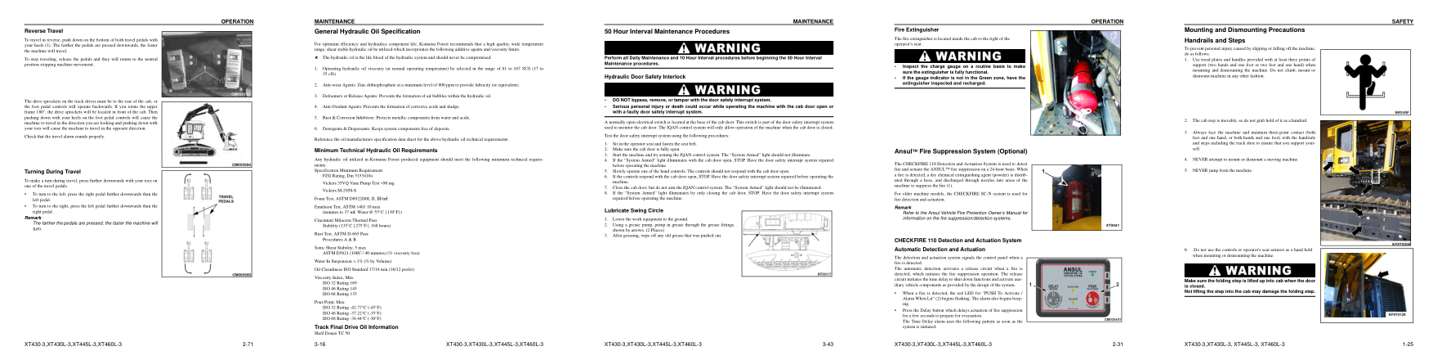
- Controls and operation, page 124: Reverse Travel
- Specifications, page 163: General Hydraulic Oil Specification
- Maintenance, page 190: 50 Hour Interval Maintenance Procedures
- Color page, page 84: OPERATION
- Color page, page 46: SAFETY
Other manuals for this machine
Save 10% on 2 manuals, 15% on 3 or more. Other manuals for the XT430-3, XT430L-3, XT445L-3 are listed below. Editions cover different serial number ranges: check the serial coverage and tick only the ones that match your machine.
Added to your cart. View cart
This is an operator's manual
Here's how it compares to the other manual types.
Service manual
Factory repair procedures and technical information such as specifications, troubleshooting, and wiring and hydraulic diagrams, for the models and systems the manual covers. See What's inside for its topics.
Operator's manual
Safe operation, controls, maintenance schedules, lubrication points, inspections, and basic checks. Repair procedures are in the service manual.
Parts manual
Illustrated diagrams with factory part numbers for identifying components and ordering parts. Repair procedures are in the service manual.
What it's used for
Factory manual for in-house farm and construction shop use. Straightforward, complete, and easy to follow. It contains the OEM information dealership service departments and parts counters use to diagnose problems, identify components, and perform maintenance or repairs correctly.
Service shops and owner/operators who repair their own equipment
Identifying correct parts and seeing how assemblies come apart and go back together
Keeping equipment running with less downtime
Factory manual, 251 pages
Quantity one is the manual described above.
Fast free USA shipping
Ships in 1 business day.
60-day returns
Free if the mistake is ours. A manual ordered in error must come back unopened in its shrink-wrap; you pay return shipping and a 20% restocking fee applies. Return policy
Questions about model, serial number, engine coverage or contents? Contact us before purchasing and we'll help confirm it's the right manual. Please verify the manual type, machine model, serial number range and engine coverage before purchasing: manuals ordered in error carry a 20% restocking fee (return policy).